Saturday, December 19, 2009

#94 - "Midnight’s Children" by Salman Rushdie

I failed.  Miserably.  I gave up on this book.  After almost three months of lugging it around with me everywhere I went, trying to bribe myself into reading a page or two every day, and still only being half done, I couldn't stand the sight of it.  I couldn't read another page.  I didn't want to renew it again for the third ... or was it fourth?... time at the library.

I actually think Salman Rushdie failed me.  This book was boring and moved way too slowly.  When the main character -- the first person narrator! -- hadn't even been born yet a hundred or so pages in, I knew I was in trouble.  I didn't particularly like any of the characters or care what was going to happen to them.


The novel is written as the fictional autobiography of a boy who was born at the stroke of midnight August 14, 1947 when India gained independence from British colonial rule.  "Midnight's Children" is a reference to all of the children born at that time, with the theory that they all shared a cosmic link both with each other and with the nationhood of India.  The novel is the first-person story of this boy comprised of anecdotal tales of his family and childhood against the backdrop of Indian history, sort of following him and India growing up together, with heavy doses of magic realism thrown in.  Mostly, though, it was just boring.


I read just over half the book and had 242 pages to go -- 242 pages too many, if you ask me.  Maybe I'm a failure for giving up on him, but I'm putting Salman Rushdie on the failboat for writing something that didn't make me
want to read.

Tuesday, November 24, 2009

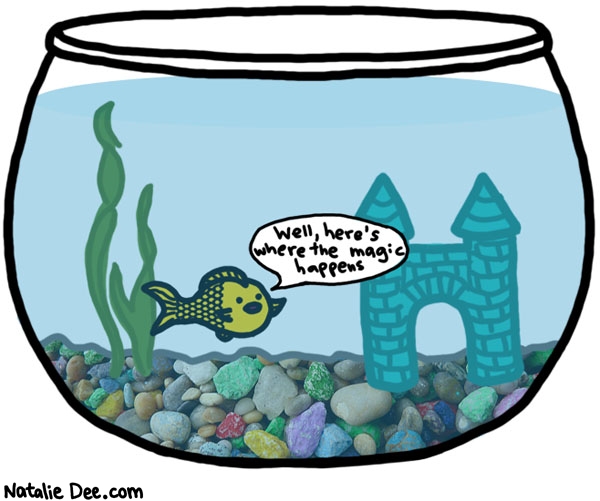
it's magical

The Lost Symbol arrived for me at the library today!  Some magic must have conspired to get me that book before my book club meeting next week because last I looked I was number 700-something in line.  Thank you, magic.


And, yes, there's a Natalie Dee comic for every occasion.


Tuesday, November 17, 2009

all it takes is a little sunshine

Finally, some progress.  It was a nice warm day so I got to sit outside after work and read.  There were only a few distractions: a head filled with too much caffeine, a hawk ripping apart something dead right behind me, the normal beggars (seriously, I’m not giving you $1.25 for the bus), some boys that thought I was funny (I was not funny).  But I read, and that's the point.  I even enjoyed some of it.  Here's a part I particularly liked (page 111):


By the time the rains came at the end of June, the fetus was fully formed inside her womb.  Knees and nose were present; and as many heads as would grow were already in position.  What had been (at the beginning) no bigger than a full stop had expanded into a comma, a word, a sentence, a paragraph, a chapter; now it was bursting into more complex developments, becoming, one might say, a book -- perhaps an encyclopedia -- even a whole language...


Punctuation babies ... I like it.

What's the forecast for tomorrow?

Monday, November 16, 2009

um, so 2011 is looking pretty awesome

So I'm averaging about one page of reading a day. At this rate, I will finish on Wednesday, January 19, 2011. That's 429 days from now in case you're counting.*

Hey, I said I'd finish, right? I didn't promise it would be this year ... or next.

*I wasted an hour of potential reading time to do this. Well, 10 minutes to math/google/write, and 50 minutes to look at Natalie Dee comics... 

Sunday, November 15, 2009

On why I am a horrible reader and what I plan on doing about it.

I promise to finish my book.


Boo on me.  I’m bad at this.  It’s hard to read when there’s road trips to go on, and bands to see, and TV to watch (The Vampire Diaries anyone?  Soooo good.).  But I will finish this book, I promise.  Maybe it’s finally getting interesting.  On page 98.  Maybe maybe???  Ugh.

Thursday, October 22, 2009

book club: "The Time Traveler's Wife" by Audrey Niffenegger


So tonight I had book club, where we mostly drink wine and eat overpriced appetizers and laugh a lot, but we do actually discuss books (unlike my other book club where we only drink wine and laugh a lot, without the books).  This time we all -- or mostly all -- read The Time Traveler's Wife by Audrey Niffenegger.  Now I have to admit I read this book several months ago, so I was kinda playing catch up with my bad memory to discuss it.  But I really, really liked this one, and it seemed like it went over well with the rest of the girls in book club, too.  It's a book that takes some getting used to.  Not only is it enormous, and you have to get over the initial shock of how long it is, but then you need to adjust to the book's constantly changing perspective between Claire and Henry and all that darn time travel.  Sometimes it was just plain hard to figure out who was talking and when...  But figuring all of that out is SO worth the investment, and you'll probably be happy you did.  Good book choice, Amanda!

Word on the street is that our next book club book is ... The Lost Symbol!!!  Yay!  That's so right up my alley.  I'm excited.  Of course, I've had my name on the hold list at the library for a while now and I've managed to move up to number 751 in line.  Unless we decide to hold our next book club in 2011, I'm going to have to break down and actually buy a book -- eek!

Good news is I just saw that my next reading list book is in, Salman Rushdie's Midnight's Children, so I'll start that when I finish the book I'm already reading ...  sooo many books!!  :)

Sunday, October 18, 2009

beachy reads: "The Other Queen" by Philippa Gregory


I sure do enjoy some good historical smut.  Philippa Gregory is the modern queen of the genre. I’d read one other of her books before, The Other Boleyn Girl, which I wasn't a huge fan of; I thought it went into way too much detail and dragged the story out a few hundred pages too many.  I enjoyed The Other Queen quite a bit more.


The "other" queen is Mary Queen of Scots, cousin and rival of Queen Elizabeth I, and the story centers around the first couple years of an 18-year imprisonment in England that Elizabeth imposed on Mary.  Gregory paints a picture of England as a really horrible place where everyone is spying on everyone else, everyone lies, everyone is jealous, no one is safe.  It’s miserable.  When Queen Mary fled to England from Scotland looking for Elizabeth to protect her, Elizabeth instead imprisoned Mary to prevent her from trying to take the throne that she may have had more claim to anyway.   Mary is put in the care of George Talbot, the Earl of Shrewsbury, and his new wife Bess.  George falls hopelessly in love with the Scottish queen, who is known as the most beautiful woman in the world.  Anyone who knows history knows how Mary’s story ends...  It’s not a happy one.


I enjoyed this book.  I thought Gregory did a much better job on this than The Other Boleyn Girl.  It’s a very dramatic time period with interesting characters, and Gregory does a good job of fleshing out the historical record to create a good, engaging fictional story.


One of the things I’ve noticed about the two books I’ve read by Gregory is that the role of women is something she takes great pains to explore.  Let’s just say, thank goodness I don’t live in England in the 16th century!  Despite being incredibly powerful, wealthy, and smart, the female characters are also almost totally dependent on the men in their lives who pull all the strings and manipulate them to their own whims.  It’s really depressing...  so much power and yet so little, just because they're women.


After reading this, I want to go to Scotland, even though almost none of the story even takes place there, and Gregory really doesn’t make it sound all that great (she calls the Scottish “barbarians,” but then again she’s English so I guess that’s typical).  I want to go there and wear wellies and plaid skirts and cozy wool sweaters like I’m in a Ralph Lauren ad.  Doesn’t it sound romantic?! 


So a few weeks ago I put a hold at the library on the next book on my list.  Until that comes in, I’ll keep reading things for FUN.  Right now I’m re-reading one of the Sister Fidelma mysteries by Peter Tremayne.  This is my favorite mystery series, and it’s also historical fiction, but about 7th century Ireland, which is a really super fascinating time period.


* These pictures of Mary are taken from a site called Portraits of Mary, Queen of Scots

Tuesday, October 13, 2009

beachy reads: "The Jane Austen Book Club" by Karen Joy Fowler


The second book I read on vacation was The Jane Austen Book Club by Karen Joy Fowler.  Basically, it’s about a group of women and one man who do just what it says: talk about Jane Austen books.  It’s more than that, though, because during the course of their meetings, you’re introduced to the backgrounds of the characters and how their lives are intertwined.  


This book is sweet and nice, and I didn’t really love it or hate it.  Maybe I didn’t give it enough attention (what with all the sun in my eyes and all), but I had trouble getting interested in the characters and caring very much about them.  Mostly while I was reading it I was just thinking about how I really need to read a lot more Jane Austen.


I hear the movie is good.  Maybe I should Netflix it.

beachy reads: "Impossible" by Nancy Werlin


In Impossible, author Nancy Werlin brings the lyrics to “Scarborough Fair” to life.  Have you ever thought about the words to the Simon & Garfunkle song?  Werlin says that she was listening to it one day and started to really pay attention for the first time, which left her “puzzled and then a little horrified.”  She says she started to ask herself questions: why does the man ask the woman to perform these impossible tasks?  Why does he hate her?  What did she ever do to him?  Are these tasks actually impossible, after all?  From this, the novel grew. 


I really, really liked this book.  It’s engaging, suspenseful and romantic and is a nice blend of fantasy and reality.  It reminds me of Twilight in some ways.  The main character is a relatable, normal, modern high school girl whose life is interrupted by a secret fantasy world that she’s forced to integrate into her public life.  I think anyone who likes Twilight would probably enjoy this, too.  It’s only missing Edward.


There are literally dozens of different versions of "Scarborough Fair," which have been traced all the way back to the Middle Ages, probably evolving from a Scottish ballad known as “The Elfin Knight.”  The elf character is a lot like the devil.  It's such a beautiful song, but there's definitely a creepy element to the lyrics.  Here's the Simon & Garfunkle version:


Are you going to Scarborough Fair? 
Parsley, sage, rosemary and thyme
Remember me to one who lives there
She once was a true love of mine


Tell her to make me a cambric shirt
Parsley, sage, rosemary and thyme
Without no seams nor needlework
Then she’ll be a true love of mine


Tell her to find me an acre of land
Parsley, sage, rosemary and thyme
Between the salt water and the sea strand
Then she’ll be a true love of mine


Tell her to reap it in a sickle of leather
Parsley, sage, rosemary and thyme
And to gather it all in a bunch of heather
Then she’ll be a true love of mine


Are you going to Scarborough Fair? 
Parsley, sage, rosemary and thyme
Remember me to one who lives there
She once was a true love of mine

So this is what I've been up to...

I took a break from my reading list to read some things just for fun... on a beach... in Mexico.  I’m not trying to brag.  But unless you’ve recently spent a week in perfect sunshine, hugging dolphins, drinking from a coconut, and lounging by the pool, with your biggest worry being what kind of ice cream they’ll have that day at the all-inclusive five-star resort where you’re staying ... everything I say will sound like bragging.  Sorry.  So that’s where I’ve been.  It’s been nice, and I’ve done a lot of reading.  On my week-long vacation I read three books: Impossible by Nancy Werlin, The Jane Austen Book Club by Karen Joy Fowler, and The Other Queen by Phillippa Gregory; and of course I'm going to write about all of them.


Tuesday, September 29, 2009

#95 - "The Sorrows of Young Werther" by Johann Wolfgang von Goethe

I read Faust in college, which is Goethe’s most well-known work.  I don’t remember much about it other than I didn’t like it, which may not have really been Goethe’s fault.  I was anti-Goethe right off the bat because my professor insisted on pronouncing his name with a pretentious German accent.  I know it’s wrong, but it would be better for me if his name rhymed with “both.”  Sorry Germany.  Because of this, I wasn't looking forward to reading Werther, but it was better than I expected.


Werther is an epistolary novel, which means it’s written as a series of letters (another epistolary novel recently read and enjoyed:  The Guernsey Literary and Potato Peel Pie Society... so good.  I should write about it).  Most translations use the title The Sorrows of Young Werther, but the version I read was called The Sufferings of Young Werther.  I like the word “suffering” better because I think it’s more indicative of Werther’s pain.


The basic premise is that Werther is a young artist who falls instantly and madly in love with Lotte, who is already engaged to be married to Albert.  The story unfolds as Werther writes very detailed, intimate letters to a friend, and we learn that he’s an incredibly emotionally unstable guy.  He just can’t stay away from Lotte, and his obsession is all-encompassing.  Eventually, when he can no longer stand the pain he’s causing both himself and Lotte, he briefly considers murdering either her or Albert, but instead commits suicide.  Heavy stuff. 


The whole time I was reading this and thinking about Werther as a character, I was imaging it as an episode of some cop show on TV.  I picture Werther as this sort of creepy, stalker guy who’s totally obsessed with some girl.  Her husband ends up murdered, and Werther is the prime suspect.  Remember the weird brother kid in Wedding Crashers?  Werther would totally be played by that guy.  


A lot could be said about Werther’s character and all his faults.  Yeah, he’s a little ridiculous, and he’s way over-dramatic, but when you really start to look at Lotte’s character, you realize that she is just as much at fault.  She has to know that Werther is unstable, but she encourages him and likes the attention.  It says that she wants him to marry one of her friends so he’ll always be around. It kinda makes me not like her, even though of course she’s written about very sympathetically by Werther in his letters.  He thinks she’s practically an angel. I feel like she’s the girl we all know who is in a relationship but still wants to keep other guys around just to make herself feel better.  It’s not fair to anyone.  At times I felt sorry for Werther and even embarrassed for him.


I make fun of it, but this book is really actually pretty good, and its cultural impact was definitely reflective of it being a good story.  Werther was written in 1774 and was one of the early impetuses of the entire Romanticism movement.  It’s a story out of a completely different time, when over-the-top romantic sensitivity and passionate expression were more normal than we’re used to now.  Werther is generally considered Goethe’s semi-autobiograhpy, with a lot of similarities to his own life, as well as the life of one of his close friends who committed suicide after a failed relationship.  Because of this, I think it allowed Goethe to put even more feeling and real, raw emotion into the story, especially since it’s almost entirely written in Werther’s first person view.


This isn’t the most fun you’ll ever have reading.  That’s for sure.  And I wouldn’t recommend it to most people for that reason, but it’s definitely well-written and gives you something to think about.


Up next: Midnight's Children by Salman Rushdie ... but first, maybe something a little more beachy :)

Thursday, September 17, 2009

#96 - One Thousand and One Nights

I actually skipped reading this one because I just didn't have the patience for short stories, and I think the history of this book and its artwork is much more fascinating than the stories themselves.

You've probably heard the general idea of Arabian Nights: a Persian king is going to execute his new bride, Scheherazade, the morning after the wedding (yeah, he's a jerk), but she delays him by telling a story.  Then every night for 1,001 nights, she starts a new story to further postpone her execution. The 1,001 stories run the gamut of genres, and are collected in what we in North America usually now call Arabian Nights.  The most famous story is undoubtedly Aladdin, thanks to Disney.  
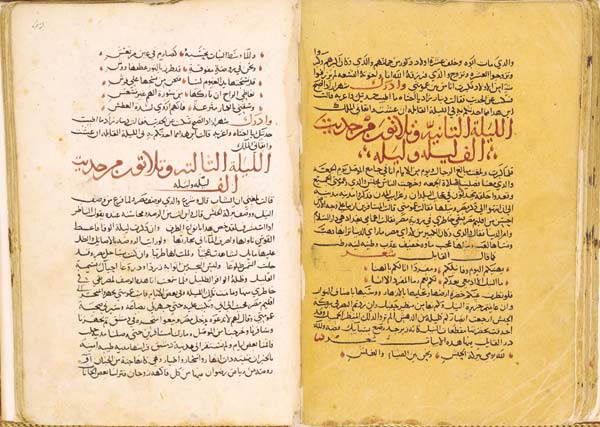
The stories themselves are really ancient, which is what I think is most interesting about them.  They're believed to be from around the 9th century, but they were collected over centuries all around the Middle East and North Africa.  The oldest surviving text is from the 14th century:


There's an interesting site, http://www.mythfolklore.net/1001nights/index.htm, that has cataloged a lot of images from various versions of Arabian Nights, from different eras and parts of the world.  I think the pictures are pretty amazing.  

Sunday, September 13, 2009

#97 - "The Hitchhiker's Guide to the Galaxy" by Douglas Adams


Aliens. Outerspace. Mice who rule the world. You have got to be kidding me. I don’t really like to say I hate a book ... but I hate this book.


The basic story is that Earth is destroyed, and one nerd from England manages to accidentally survive and meet up with this ragtag group of aliens that get into various predicaments. Other than that, I don’t really know what the point is.


The best part of this book is it’s only 152 pages long. The worst part is you have to read 152 pages like this:

Ford Prefect’s original name is only pronounceable in an obscure Betelgeusian dialect, now virtually extinct since the Great Collapsing Hrung Disaster of Gal./Sid./Year 03758 which wiped out all the old Praxibetel communities on Betelgeuse Seven.

OMG


It’s just dumb.


The Amazon review says, "You'll never read funnier science fiction." Um, there wasn't one funny thing about this book. Not one. That gives me no hope for the entire sci-fi genre.


One very small, slightly interesting little tidbit: the word “Babel fish” came from this book. It's this slimy little fish you put in your ear that then translates all languages for you. Convenient for inter-galaxy travel, but ew, gross, a fish in your ear.


So, in case I wasn’t clear, I don’t recommend this book at all, unless you love lame dialogue, stupid outerspace jokes, and pointless wastes of time.


Next up, One Thousand and One Nights.

Sunday, September 6, 2009

slow going ...

I'm having a really hard time reading the next book on my list -- The Hitchhiker's Guide to the Galaxy. I mean, come on, it has the word galaxy in the title. It's soooo sci fi it's ridiculous. And I actually even liked Star Trek. I've been reading for a few days and have managed to get to page 28. Ugh. I'll update as soon as I can.

Sidetracked! -"People of the Book" by Geraldine Brooks

About six months ago I saw this book at Borders and literally stood in the store and put a hold on it at the library , from my phone. It finally arrived a couple of weeks ago, so I had to take a break to read it. I'm so glad I did.


I couldn't really remember what I had read on the book jacket way back when. I was kinda thinking it would be another Da Vinci Code... Brilliant academic at the top of his/her field finds lost treasure and is chased around the world by evildoers out to erase history... Suspense and terror enfold ... Or something. That's not really it at all.


The premise of People of the Book is that a brilliant academic at the top of her field (umm, ok) -- an archivist specializing in ancient books -- is assigned with restoring the Sarajevo Haggadah, a very rare Jewish religious text that has survived many centuries and crossed many paths. She discovers a series of artifacts in the binding of the book and through these is able to trace the book's history. It's impossible not to make some Da Vinci Code comparisons, but generally I think this book stands out on its own as a really enjoyable and interesting read.


What really got me was that the Sarajevo Haggadah is REAL. Some of the things that happen in the book are REAL. Brooks created a fictionalized tale about the history of this amazing book based on actual historical proof. That’s pretty awesome. Read more about the real Sarajevo Haggadah here.


While I was reading this book, I actually had an opportunity to visit the Dead Sea Scrolls exhibit at the Royal Ontario Museum in Toronto. The timing couldn’t have been more perfect. To see real life history first hand, to see the way Christians, Muslims and Jews have been interacting and even depending on each other for centuries, to see the importance of the preservation and exploration of history -- in the context of reading this book -- was really great. I definitely recommend both the book and the exhibit (the dinosaurs at the ROM are pretty sweet, too).


A page from the actual Sarajevo Haggadah. It's so pretty...


Monday, August 17, 2009

I've been re-branded

Yay! Amore made me this FABULOUS new logo and gave me the name "the word nerd." So perfect. So much better than whatever lame thing I came up with on my own. THANKS THANKS THANKS, AMORE. Isn't she great?!

Sunday, August 16, 2009

#98 - The Home and the World by Rabindranath Tagore

Hmmm... so this was interesting. I had never heard of this book before reading it. And I’m having trouble deciding what I think. After reading LOTR, there couldn’t have been anything more different. The focus here is on philosophies, politics, metaphors ... oh, so many metaphors ... and definitely not on action. The language was beautiful, which is probably the nature of it having been written in Bengali, and some of the concepts were ones that I won’t easily forget.


Set in India in the early twentieth century, this novel focuses on a love triangle that develops between a man, his wife, and his friend, against the backdrop of national political upheaval. Rabindranath Tagore is considered one of India’s premier novelists, who received the Nobel Prize for Literature in 1913. This work was published in 1916, and my copy from the library is actually stamped June 20, 1919. It even smells nice and old!


The book is structured as a series of first-person accounts from the three main characters: Nikhil, a wealthy and well-educated maharajah; Bimala, his traditional wife; and Sandip, his childhood friend and leader of a revolutionary movement called Swadeshi that is like the whole anti-foreign goods/”buy American”/”freedom fries” kind of thing. The basic premise of the story is that Sandip comes to stay at Nikhil’s estate, and there is an instant connection between him and Bimala. As this forbidden relationship develops, everyone’s life is thrown into chaos both in the home and on a broader scale throughout India, and the true nature of the three characters is revealed. Essentially what we get is an allegorical representation of India’s struggle for independence boiled down into this one love triangle.


This is way more a story about philosophies than action. The characters are more metaphorical than dynamic. Nikhil is a man who sits quietly back and watches as his wife is caught up in the excitement and manipulation of Sandip and his politics. He struggles with the thought of losing his wife but also believes that ultimately giving her freedom is the only way to give her love. It’s the old idea of if you love her set her free. To Sandip’s perspective, this just proves that Nikhil is a huge coward who is afraid of fighting for what he wants -- both in his home and for his country. This contrasts, of course, with Sandip, who will go to any length -- no matter how immoral -- to get what he wants. He’s greedy and selfish and whips naive Bimala into a frenzy of nationalism and passion that she has no strength to resist, just like he does with all of his political followers. He made me think of an Indian televangelist. Bimala for the first time is put in a situation where she must think for herself and decide between her husband, her home, and her country. As much as I was partial to Nikhil and despised Sandip, I also felt kind of sorry for Bimala who is annoyingly naive and makes dumb choices but only because that was the role she was forced to play in that society.


This was not a particularly easy novel to read and was a little deep for reading at the beach, but I don’t regret the time I spent with it. Conceptually it was thought-provoking and will give me some things to think about for quite a while.


Up next ... # 97 - The Hitchhiker’s Guide to the Galaxy. Is this sci-fi? Gross.

Saturday, August 8, 2009

# 99 - To Kill a Mockingbird by Harper Lee

To Kill a Mockingbird: inspiring white suburbanite rap since 1960. Inspiring my laughter for the last ten minutes.


Who hasn't read this one? It's a total American classic. I'm not going to re-read it since I already have a couple of times.

Friday, August 7, 2009

#100 - The Lord of the Rings by J.R.R. Tolkien


I did not want to read The Lord of the Rings. At all. I was glad it was the first book on the list so I could get it over with. I’m not into fantasy/weird/nerdy/boy kinds of books with creatures and battles. I mean, sure, the movies were entertaining, but hardly the same as forcing myself to read this gigantic book. So I decided that in order to satisfy the terms of my agreement (with myself) to read all the books on the list -- even the yucky ones -- I would read The Fellowship of the Ring, the first of the three books that make up the LOTR epic. Yeah, it was sorta cheating, but still. No way.


I started reading, and it was awful. The first 60 pages or so were the most tedious history of all things hobbit in the most excruciating detail. It was mind-numbingly boring. I found that it helped to drink a beer before trying to read.


Then, once I got through that prologue and was finally introduced to Frodo and Gandalf and The Shire and embarked on this wild adventure story, you know, something happened. The next thing I knew, I had read a hundred more pages, and then I didn’t want to put it down. I didn’t want to sleep. I didn’t want to watch tv. Maybe I had unleashed my inner nerd. I found myself craving more. I HAD to know what was going to happen to these characters and this world that I found myself actually caring about. After only a couple days I went back to the library and picked up The Two Towers and then a few days later The Return of the King. Basically, I was hooked.


J.R.R. Tolkien is an exceptional story teller. All the rich detail that was such a killer at the beginning turned out to be what kept me interested once the story started. When I could really picture the characters and places -- things that don’t even exist in real life but which were described so well they seemed possible -- I was compelled to keep reading. (It also helped that I kept the IMDB page open on my computer to the LOTR movie pages so I could remember, now which hobbit was played by Dominic Monaghan? And what did Boromir look like? Was it cheating? Meh.)


I’ve gotta say, there is a lot to keep track of when it comes to characters and places in these books, with impossible-to-pronounce names and words that look similar -- Mordor and Gondor, Sauron and Saruman -- and multiple names for the same person -- Aragorn/Strider/Elessar/Elfstone. Reading requires a fair investment of time and concentration. However, it’s a commitment that I found relatively easy to make. The adventure aspect of the story in combination with the imagery is so engaging it’s hard not to find yourself wanting -- needing -- to continue, and the characters themselves keep your attention. I found myself cringing whenever creepy little Gollum entered the scene, and likewise maybe sitting up a little straighter when Aragorn was around. Ok, so maybe I had a bit of a crush on Aragorn. I can’t help it! He kept saving the day! And he’s all tall and strong and kingly!


I think my little adventure in reading is off to a promising start. I went in with low expectations and was very pleasantly surprised. Turns out I really liked The Lord of the Rings and would recommend it to anyone who isn’t a fantasy fan but who likes a good old-fashioned story of adventure, friendship and good versus evil. Just skip the prologue... It’s ok to cheat a little.


Sunday, August 2, 2009

So I had this idea ....

How do these things always start? It's generally sort of a joke, right? You say something on a whim or have a random idea, and before you know it you find yourself saying, yeah, let's do it! And later you stop and go, wait, what was I thinking!?


That's how I decided to start reading 100 books.


I was trying to come up with a book to read - my usual dilemma - and I mentioned to a friend that I'd read an article called "100 Novels Everyone Should Read." "I should just read all of them," I said. Next thing I knew, ten minutes later I was at the library checking out book #100 on the list.


Lists like this are inherently contentious, and I'm really not here to argue the merits of this particular list one way or the other. People make a living out of these kinds of arguments - and I'm not one of them. One of my grad school friends wrote his entire master's thesis debating the canon of Canadian literature. Ugh. No thanks. I'm sure I won't agree with all of the choices on the list, but this isn't about that.


Really, I just want to read some books. Some of these I've read before; some I may want to read again; some I've never even heard of; some I'm dreading, really, really dreading; and some I bet will surprise me with how good they are, or how bad. Ultimately, I'll learn a lot as I go along and will enjoy having the opportunity to talk about what I read.


For now, what I know for sure is that I don't have to worry about not having something to read for a REALLY long time... and this silly adventure of mine just might end up being a lot of fun!